
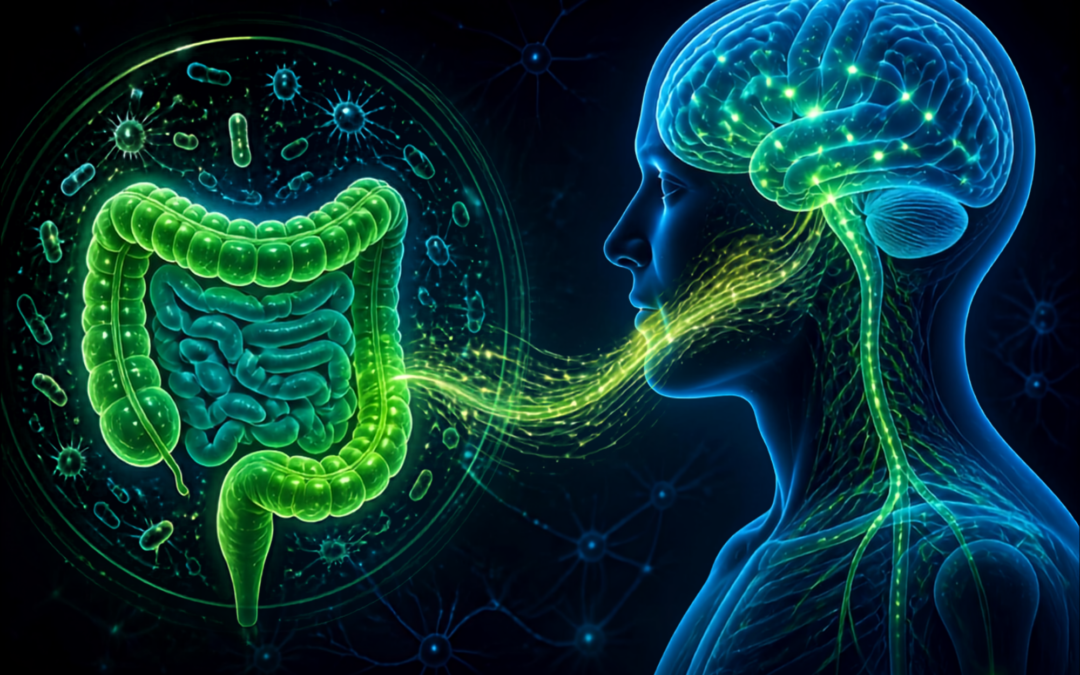
Your gut isn’t just where you digest food. It contains its own nervous system, complex enough to have earned the nickname “second brain” — and it helps explain why quitting sugar feels, for many people, like a real withdrawal syndrome.
Your Gut, Your “Second Brain”
There’s constant, two-way communication between your gut and your brain. Your microbiota — the trillions of bacteria living in your digestive system — isn’t a passive bystander: it actively participates in signals that affect your mood, attention, and cravings.
This doesn’t mean you “lack willpower.” It means there’s an entire ecosystem influencing your food decisions, beyond your conscious mind.
The Vagus Nerve and GABA: How Your Gut “Talks” to Your Brain
The vagus nerve is the main direct communication pathway between the gut and the base of the brain. What’s interesting is that certain gut bacteria can produce neurotransmitters — like GABA, the same one your own brain generates to regulate anxiety — and send signals through this pathway.
This helps explain why the state of your microbiota can influence both your mental clarity and your anxiety levels, far beyond what happens “just in your head.”
Why Quitting Sugar Feels Like a Withdrawal Syndrome
When you cut sugar suddenly, the bacteria that depended on it as fuel lose their energy source — and that can translate into distress signals traveling through the vagus nerve to your brain. Your brain may interpret those signals as an urgent craving or even anxiety, without you connecting it to what’s actually happening in your gut.
It’s one reason the first few days of cutting back on sugar tend to feel harder than the ones that follow — it’s not a lack of willpower, it’s a real recalibration of your internal ecosystem.
The Engineering Behind Ultra-Processed Food
The food industry designs specific combinations of salt, sugar, and fat — known as the “bliss point” — calculated to maximize pleasure while eating, making it harder to stop. I went deeper into this in my article on habits that harm the brain, where I also cover why coffee can be an ally (with the correct, non-inflated figure).
One related point worth mentioning: in a subgroup of people with migraine, some studies have identified aspartame as a possible trigger — though results are mixed and this doesn’t apply to the general population. If you notice a pattern between your headaches and artificial sweeteners, it’s worth mentioning in a consultation.
General Habits That Support Your Microbiota
These are lifestyle guidelines, not an individual treatment plan:
- Gradually increase your fiber intake (vegetables, legumes, whole fruit) — the main fuel for bacteria associated with better mental clarity.
- Prioritize variety and color on your plate — each color brings different antioxidants and nutrients.
- Moderate, don’t eliminate overnight — abrupt changes are harder to sustain and can intensify that “withdrawal” feeling.
- Take care of your sleep — as covered in my article on the glymphatic system, it’s key for brain repair.
Caring for Your Gut Is Caring for Your Mind
At the end of the day, caring for your microbiota isn’t a battle against yourself — it’s understanding your body better so you can make more informed decisions. If sugar cravings are affecting your quality of life, or you suspect a specific food is triggering your migraines, I invite you to schedule a consultation.
Frequently Asked Questions
What is the “second brain”?
It’s the gut’s own nervous system, which communicates constantly with the brain through the vagus nerve. It plays a role in signals that affect mood, attention, and food cravings.
Why is it so hard to quit sugar?
When you cut back on sugar, gut bacteria that relied on it for energy send distress signals through the vagus nerve, which the brain can interpret as craving or anxiety. That’s why the first few days tend to feel the hardest.
Do gut bacteria really control my cravings?
They genuinely influence them, through neurotransmitters like GABA and vagus nerve signaling. It doesn’t mean a lack of willpower, it’s a real biological interaction between your microbiota and your brain.
Are artificial sweeteners safe?
For most people, yes, within regulated limits. However, in a subgroup of people with migraine, some studies have identified aspartame as a possible trigger. If you suspect a connection, mention it to your doctor.
How much coffee can I drink without affecting my brain health?
There’s no universal number, it depends on your individual sensitivity and overall health. Regular, moderate coffee consumption has been associated with brain health benefits, but the right amount for you is a conversation to have with your doctor.