
It’s a scene that plays out in homes everywhere: you walk into the kitchen and suddenly forget why you’re there. As a neurologist, something I see often in my practice is that many of these “lapses” aren’t really memory problems — they’re attention problems. If you’re not present in the moment, your brain never actually “records” the information. Still, understanding how to improve memory for real is worth it at any age.
Acetylcholine: The Messenger Behind Your Memory
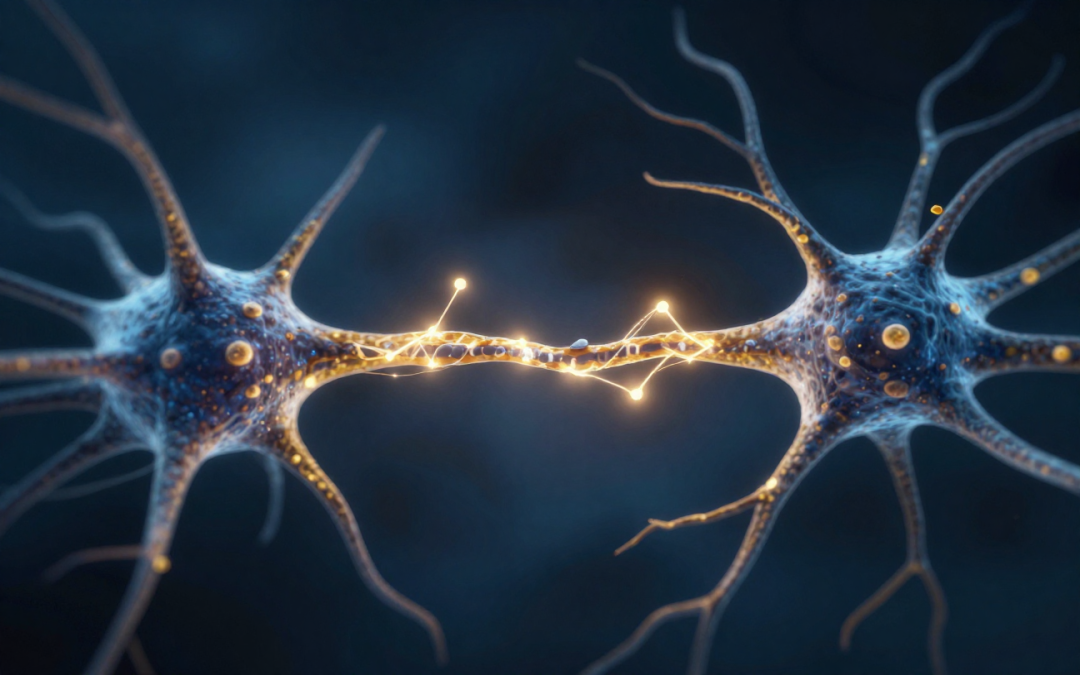
At the synapse, the star neurotransmitter for learning is acetylcholine. Picture it as the mail carrier delivering messages from one neuron to another — if the carrier doesn’t show up, communication breaks down and the information gets lost along the way.
When acetylcholine levels drop, you notice brain fog, slower processing, and more trouble retrieving specific information exactly when you need it.
Choline: What Your Brain Needs to Make Acetylcholine
The body can’t produce acetylcholine from nothing — it depends on a nutrient called choline, obtained almost entirely through diet. According to the NIH Office of Dietary Supplements, choline needs should be met primarily through diet. Office of Dietary Supplements
Some of the best food sources include:
- Egg yolks: one of the most bioavailable sources of choline.
- Liver: provides choline along with other nutrients key for cellular repair.
- Fatty fish: complements the lipid environment choline needs to function well.
What Is Citicoline, and Why Is It Studied in Medicine?
You may have heard of citicoline (CDP-choline), a form of choline able to cross the blood-brain barrier. It’s a real compound studied in scientific literature — in fact, it’s prescribed as a medication for cognitive impairment linked to cerebrovascular disease in several European countries.
To be clear: the strongest evidence for citicoline exists in patients with a specific diagnosis, under medical supervision — not as a freely available supplement for the general population. If you’re curious about it, that’s a conversation to have with your neurologist, not a supplementation decision to make on your own.
Other Factors That Also Protect (or Harm) Your Memory
We’ve covered several of these in depth already — here’s a quick summary, with more detail in the linked articles:
- Chronic stress and sustained exposure to constant complaining have been linked to changes in the hippocampus, the brain region key to memory — I go deeper into this in my article on the glymphatic system and cortisol.
- Repeated head impacts, common in contact sports, also affect long-term memory — I explained this with the “shaken egg” analogy.
- Microplastics — found in heated containers, some cosmetics, and even the air we breathe — are an active area of research regarding their possible impact on neuronal communication.
Brain Gym: Cross-Body Coordination Exercises
We all have a more “dominant” side and a lazier one in the brain. Cross-body exercises force both hemispheres to communicate, helping keep neural pathways active that would otherwise go underused.
- Fist and hop: clench your right fist while hopping on your left foot. Repeat 10 times, then switch sides.
- Midline movements: touch your left knee with your right arm, and vice versa.
- Dancing and tai chi: combine balance, movement memory, and bilateral coordination — some of the best brain gym exercises there are.
Prevention Starts With Daily Decisions
The Lancet Commission updated its modifiable dementia risk estimate in 2024, raising it from 40% to 45%. That means much of your future cognitive health depends on decisions you make today: what you eat, how you sleep, how much you move, and who you spend your time with. Frontiers
If you notice memory changes that concern you — not an occasional slip, but something persistent — I invite you to schedule an evaluation at my practice in Miami. Catching early on whether it’s attention, stress, or something that needs further workup makes all the difference.
Frequently Asked Questions
How can I improve my memory naturally?
Eating choline-rich foods (like eggs, liver, and fatty fish), sleeping well, managing stress, and doing cross-body coordination exercises are neuroscience-backed strategies to support memory.
What foods help improve memory?
Egg yolks, liver, and fatty fish are rich sources of choline, the nutrient your brain needs to produce acetylcholine, the key neurotransmitter for learning and memory.
Is it a good idea to take citicoline supplements for memory?
Citicoline’s strongest evidence is in patients with diagnosed cognitive impairment, under medical supervision. It’s not recommended as an over-the-counter supplement; any supplementation decision should be discussed with your doctor.
When is forgetfulness normal, and when should I be concerned?
Occasional forgetfulness, especially related to inattention, is common and normal. If forgetfulness becomes frequent, progressive, or affects daily life, it’s worth an evaluation with a neurologist.
Do brain exercises actually help improve memory?
Cross-body coordination exercises, dancing, and tai chi stimulate communication between brain hemispheres and may help keep neural connections related to memory and coordination active.