
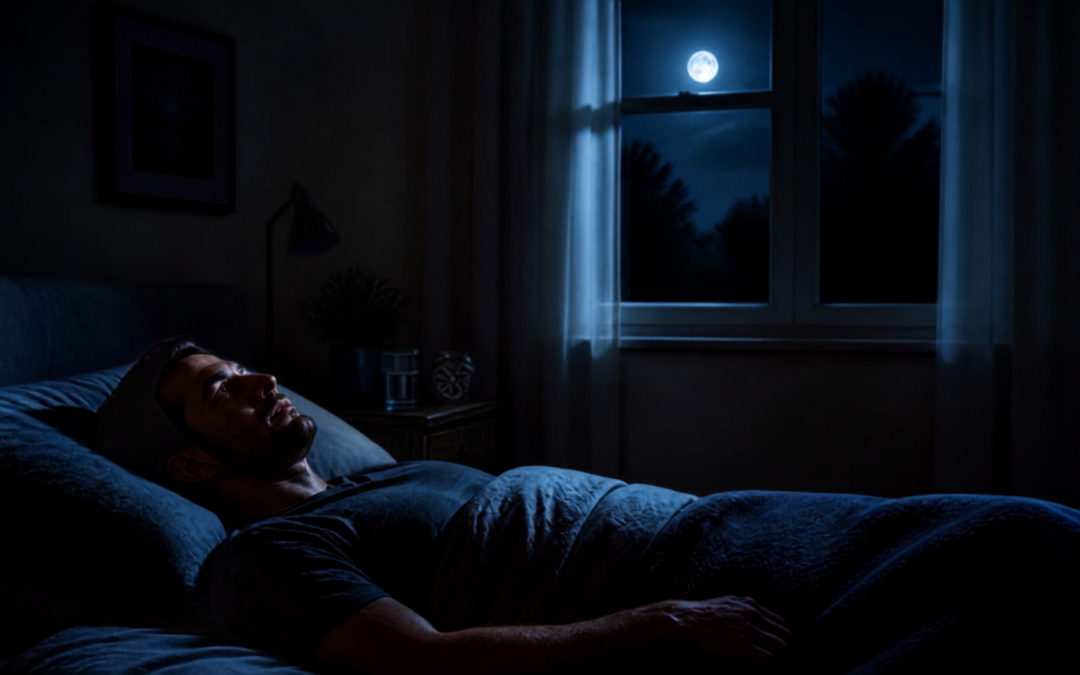
If you wake up almost every night around the same early-morning hour, wide awake with your mind racing, you’re not alone. There are several real explanations behind this pattern — some historical, some very modern — and the good news is that most of them can be adjusted.
A Pattern That Goes Back Further Than You’d Think
Historian Roger Ekirch documented that, before widespread artificial light, it was common across much of Europe to sleep in two blocks: a “first sleep” and a “second sleep,” separated by a period of wakefulness in which people socialized, ate, or simply rested awake. That habit faded with artificial lighting, but the underlying biological pattern didn’t fully disappear.
When something disrupts your usual sleep routine, it’s common to “fall back” into that segmented sleep pattern.
What Happens in Your Body at That Hour
Around the early morning, several normal physiological changes occur:
- Your body temperature drops — which actually supports better-quality sleep.
- You enter a lighter phase of REM sleep, making it easier to wake up.
In other words: waking up at that hour isn’t always “abnormal” — often it’s your brain moving through a natural transition between sleep stages, more vulnerable to any other factor that disrupts it.
Alcohol Is a Trap for Your Sleep
Many people drink alcohol thinking it helps them sleep. In reality, while it may help you fall asleep faster, sedation isn’t the same as good sleep. Alcohol fragments sleep, worsens its quality, and if you have sleep apnea (or a predisposition to it), it can make it significantly worse.
That Afternoon Coffee Counts Too
Coffee has real brain health benefits — it’s been associated with lower Parkinson’s risk and, according to some studies, lower Alzheimer’s risk too (you can read more about this in my article on habits that harm the brain). On cancer, the evidence is more specific: it’s been associated with lower risk for some types, like liver cancer, but it’s not a “general preventive.”
The issue is timing. Caffeine can still be active in your system 4 to 5 hours after you drink it. As a general guideline, try to limit coffee to mornings and midday, avoiding it after mid-afternoon.
The Mistake We Make the Moment We Open Our Eyes
If you wake up at 3 AM and the first thing you do is check your phone, you’re sending your brain a blue light signal it interprets as daytime — I explained this mechanism in depth here. That blocks melatonin production right when your body should be preparing to fall back asleep.
What to Do If You Can’t Fall Back Asleep
- Stay in bed, with the lights off, for a few minutes, breathing deeply.
- If after a while you still can’t fall asleep, get up and go to another room — without turning on bright lights.
- Sit, breathe deeply, and wait until you feel sleepy again before returning to bed.
- Reserve the bed only for sleep (and intimacy) — avoid using it to check your phone or dwell on worries.
If this pattern repeats almost every night and affects your daily life, it’s worth a consultation to rule out other causes.
Frequently Asked Questions
Why do I always wake up at the same time in the early morning?
It may be due to the natural transition between sleep stages, including a lighter REM phase, combined with factors like alcohol, late caffeine, or blue light exposure. There’s also a historical pattern of segmented sleep that some people “fall back into” when their usual sleep routine is disrupted.
Does alcohol help you sleep better?
Not really. While it may help you fall asleep faster, it fragments sleep and reduces its quality, and can worsen or trigger sleep apnea.
How late can I drink coffee without affecting my sleep?
Caffeine can still be active 4 to 5 hours after you drink it. As a general guideline, it’s best to limit coffee to mornings and midday.
What should I do if I wake up and can’t fall back asleep?
Stay in bed with the lights off for a few minutes; if you still can’t sleep, get up, go to another room without bright lights, breathe deeply, and return to bed when you feel sleepy again.
Is it normal to wake up during the night?
Yes, briefly waking between sleep cycles is normal. It becomes a concern when it happens frequently, lasts a long time, and affects your daytime functioning — in that case, an evaluation is worthwhile.